
Emergency Air Duct Cleaning Near Me: What Harvey Park Homeowners Should Do First
If your home has just had a fire, a water intrusion, or a rodent discovery, the single most important thing you can do is shut off the HVAC system before you call anyone. Contaminants settle in the ducts, and running the air handler pushes smoke, soot, moisture, or rodent debris into every room the system serves. Isolating the system takes under two minutes. Then you call. If you’d rather not troubleshoot it yourself, call us at (833) 660-4969 and we’ll walk you through shutting it down.
We’ve seen this go wrong in Harvey Park more times than we’d like: a homeowner smells smoke, turns the thermostat on to “see if it’s coming from the vents,” and spreads the problem through the whole house. The cleaning is the fix. The first 30 minutes are what decide how big the fix has to be.
Why the Air Handler Has to Go Off Before Anything Else
The air handler is the engine of your ductwork. It pulls return air from the house, pushes it through the furnace or air handler, and sends it back out through the supply vents. As long as it’s running, it’s moving particles. Smoke residue, soot, rodent droppings, and moisture all travel the same path the air does, and each pass deposits more material in the ducts, coil, and blower.
Shutting the system down protects you in three ways:
- It stops the spread. Contaminants stay where they landed instead of cycling into bedrooms and living areas.
- It protects the equipment. Soot and debris pulled through the blower and evaporator coil can coat moving parts and fin surfaces, which turns a cleaning job into an HVAC repair.
- It makes the cleaning more effective. A professional crew works best on a system that isn’t fighting them with its own airflow.
Here’s the sequence we give homeowners over the phone:
- Flip the thermostat to OFF. Not “fan on,” not “auto” – off.
- Go to the furnace or air handler and switch off the service disconnect (the light switch-style switch near the unit, or the breaker labeled for the furnace).
- Close the supply and return grilles in rooms where smoke, water, or pest activity was concentrated, if you have adjustable dampers.
- Don’t run ceiling fans or portable fans in the affected area. They do the same thing the air handler does.
- Take photos before you touch anything else.
Once the system is off, call. We answer 24/7. Fast dispatch from 7am to 7pm, Sunday through Friday.
Which Duct Emergencies Actually Need Same-Day Cleaning
Not every situation is a same-day job, and telling homeowners which is which saves them real money. Here’s how we triage it:
Call today – same-day cleaning matters:
- Smoke or soot intrusion from a fire, even a small kitchen fire that was extinguished quickly.
- Sewage backup that reached the ductwork or furnace area.
- Rodent or bird infiltration where droppings or nesting material are visible in vents or at the furnace.
- Mold visible around supply registers, or a musty odor that appeared after a leak or flooding.
- Any situation where a contractor has opened a wall or ceiling and debris has fallen into the duct runs.
Can usually wait 24 to 48 hours without added risk:
- General dust buildup, even heavy dust, with no trigger event like fire, water, or pests.
- A musty smell after a humid stretch with no evidence of standing water.
- A pet accident near a floor register where the air handler was never run afterward.
If the event involved fire, sewage, or pests and the air handler was running afterward, treat it as a same-day situation. That extra run time is what turns a localized problem into a whole-home one.
What to Photograph and Document Before the Technician Arrives
Before you clean anything, document it. Insurance claims for duct cleaning after a covered event – a fire, a burst pipe, a sewage backup – move fastest when there’s a clear before picture. Here’s what to capture:
- Every affected register and grille: pull the cover off where it’s safe and photograph the visible duct interior. Include the floor or wall around it.
- The furnace and air handler: blower compartment, filter slot, and any discoloration on the unit housing.
- The filter: photograph it in place, then bag it. Don’t throw it out. A contractor or adjuster may want to see it.
- Attic or crawlspace duct runs, if accessible, showing any crushed or disconnected sections.
- The event itself: any fire report, water-damage photos, or pest-control invoice from the same incident.
Take wide shots and close-ups, and note the date. If the claim includes mold or pest contamination, keep a written timeline of when you noticed the problem. A short note saved on your phone is more than enough.
Why Standard Vacuuming Isn’t Enough After Smoke or Biohazard Events
Here’s where we get technical, because it matters. Consumer-grade and light commercial vacuum setups pull loose dust from easy-to-reach duct sections. That’s fine for routine maintenance. It’s not enough after fire, sewage, or rodent contamination, and there are three reasons why:
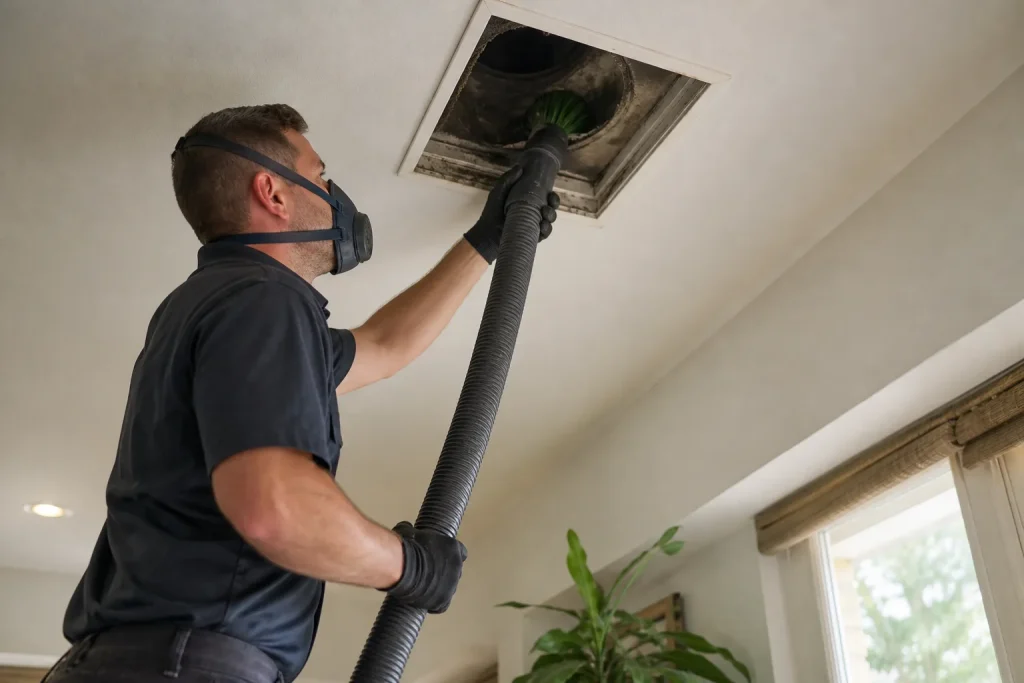
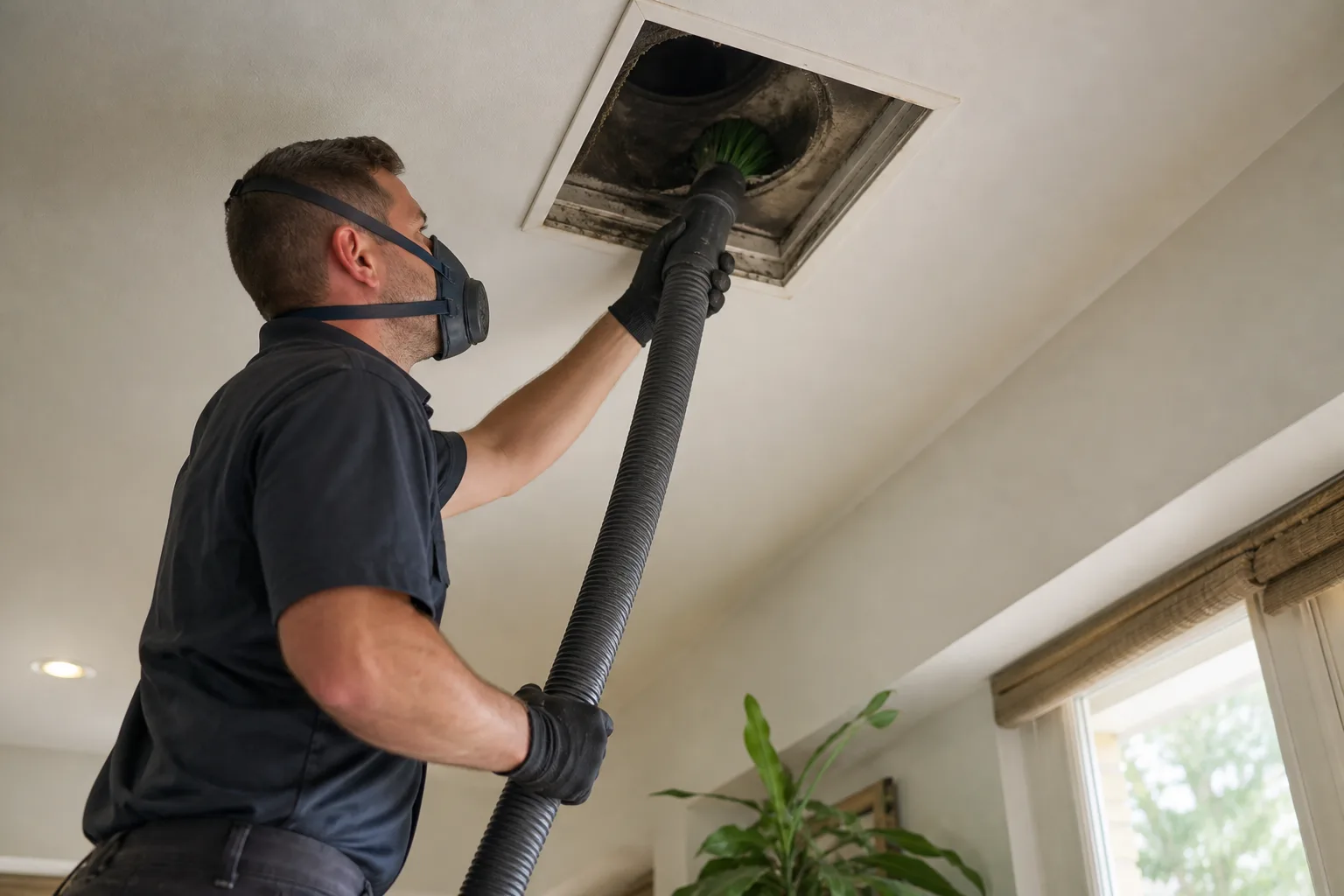
- Contact matters. Soot and pest residue bond to duct walls. Rotobrush contact cleaning physically agitates the surface with a rotary brush under negative pressure, which is why the same equipment is used by professional HVAC contractors nationwide. You can’t vacuum off a coating you haven’t broken loose.
- Filtration is the whole job in a biohazard situation. When the contaminant is mold spores or rodent debris, the crew’s vacuum system has to trap what it pulls out. Abatement Technologies air filtration equipment is remediation-grade: the same class of machinery used in mold and contaminant abatement projects. That’s a different class of job than a shop-vac rig.
- Cleaning isn’t the finish line. After a smoke event, ducts often need sanitizing. After a rodent event, they may need repair where pests chewed or disconnected a run. That’s why we keep duct repair and sealing as a core service. We can clean it, seal it, and sanitize it in one visit instead of handing you off to a second contractor.
We use Nikro professional-grade HVAC cleaning tools alongside the Rotobrush equipment for the same reason: commercial-class tools handle commercial-class contamination.
The Harvey Park Factor: Older Duct Configurations and Contamination Events
Harvey Park has a lot of homes built before 1980, and the ductwork in those homes is different from what you’ll find in newer construction. Older configurations tend to have shorter runs, sheet-metal trunk lines with fewer joints, and in some cases duct layouts that were modified or extended over the years. During a contamination event, those characteristics cut both ways.
- Steel trunk lines hold up well but accumulate soot in the seams and corners where a consumer vacuum won’t reach.
- Older flex duct sections added during a remodel are more vulnerable to tearing or crushing, and contamination can lodge in the liner.
- Retrofitted or non-standard runs often have disconnects and gaps at the joist bay where a pest can get in and where smoke can leak out into the attic.
That’s the argument for using a crew that inspects and repairs, not just cleans. We don’t just clean your ducts – we inspect, repair, seal, and sanitize the full system, which matters more in a building from 1975 than one from 2005.
When to Call a Pro (and What to Expect on the Call)
If you’re reading this because something happened – a fire, a water event, a rodent problem – call now and isolate the system first. If you’re reading it because your ducts are dusty and your bills are climbing, this isn’t urgent, but it is worth scheduling. Our Air Duct Cleaning Harvey Park page lays out the full process if you want to read before you call.
When you call, have three things ready: whether the air handler has run since the event, what kind of contamination you’re dealing with, and the age of the home. We’ll decide together whether it’s a same-day job or a scheduled one. The estimate is free and the price is set per job by the written estimate, so you know the number before work begins.
Related services in Harvey Park: air duct cleaning, HVAC cleaning, and dryer vent cleaning.
One thing that surprises homeowners: the dryer vent can be clogged before the ducts are, and a fire, flood, or pest job often turns one up. We check it when we’re already at the system.
The Bottom Line
Triage first, clean second. Shut off the air handler, close the registers, photograph everything, and only then call. Most of the damage from a duct emergency isn’t the contamination itself – it’s what happens when the system keeps running afterward. In Harvey Park, older duct configurations make that more important, not less.
Once the system is off, a trained crew can assess, clean, repair, and sanitize the full system with professional-grade equipment, the same tools commercial contractors rely on. Our technicians have up to 12 years of experience. We don’t just clean your ducts – we inspect, repair, seal, and sanitize the full system, and we stock and service Aprilaire and Honeywell air-quality products if your next step is a whole-home improvement.
If you’re in Harvey Park and need help, Air Duct Cleaning Harvey Park offers free estimates – call (833) 660-4969. We answer 24/7. Fast dispatch from 7am to 7pm, Sunday through Friday. We’re closed Saturday. A call outside dispatch hours is booked into the next opening.
Frequently Asked Questions
Shut off the thermostat and the furnace disconnect before anything else, then open windows in the affected rooms and take photos of the registers. Smoke in the ducts means the system is circulating soot, so stopping airflow is the priority. Call (833) 660-4969 for a free estimate once the system is off.
No. Running the fan pushes contaminants through every room the system serves and coats the blower and coil with soot, debris, or spores. Turning on the fan is the most common mistake we hear about after a fire or pest discovery. Keep the system off until a professional inspects it.
Yes, in most cases. Fire smoke, sewage, and rodent contamination spread into the system and worsen with time and humidity, so same-day cleaning is the safer call. General dust buildup can usually wait 24 to 48 hours without added risk. Call (833) 660-4969 to sort out which situation you’re in.
Coverage depends on your policy and whether the contamination came from a covered event like a fire or burst pipe. That’s why documenting before cleaning matters – photos, filters, and a written timeline help. Call (833) 660-4969 for a free estimate and we’ll help you build the record your adjuster needs.
Written by the team at Air Duct Cleaning Harvey Park.
Need Air Duct Cleaning Help?
Call Air Duct Cleaning Harvey Park - the local pro we connect you with is licensed and insured, with free written estimates in Harvey Park.
(833) 660-4969