
Last updated November 24, 2026
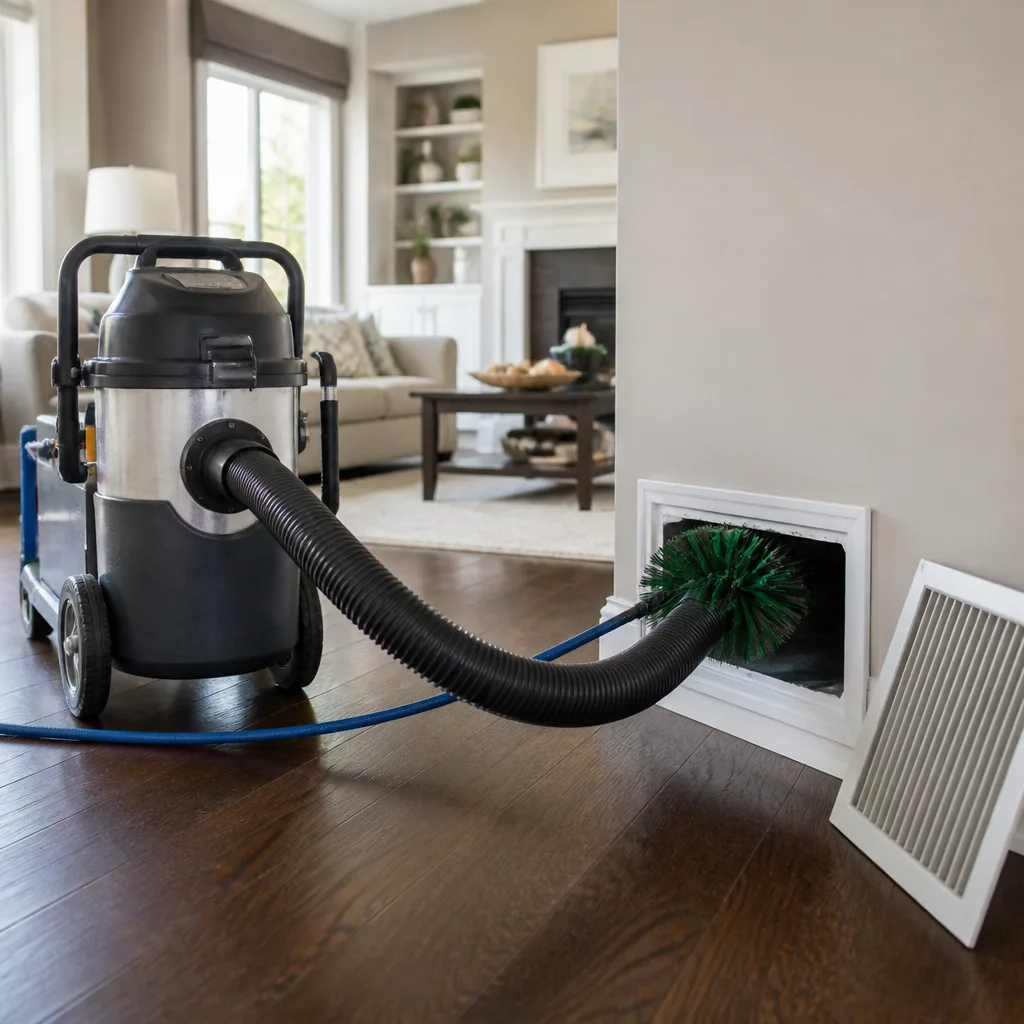 Whole-home duct cleaning
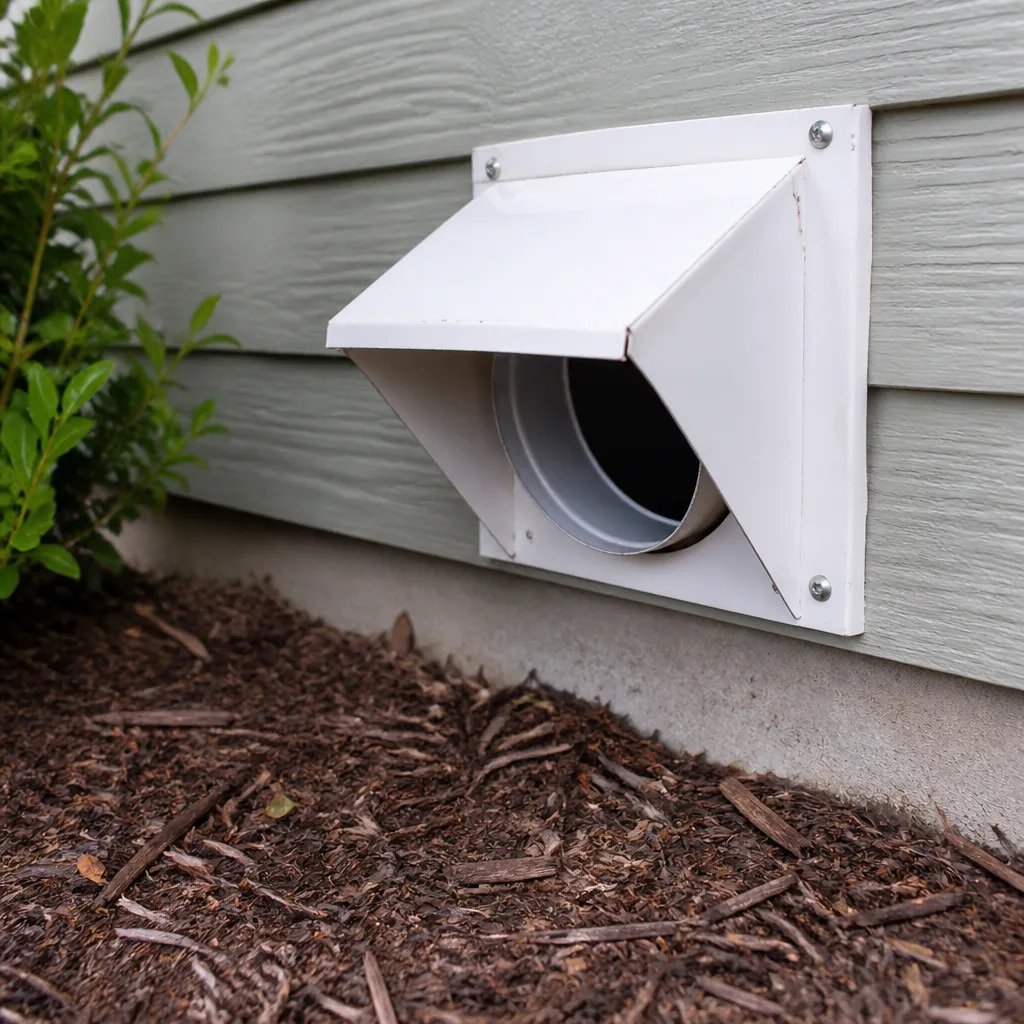 Dryer vent cleaning
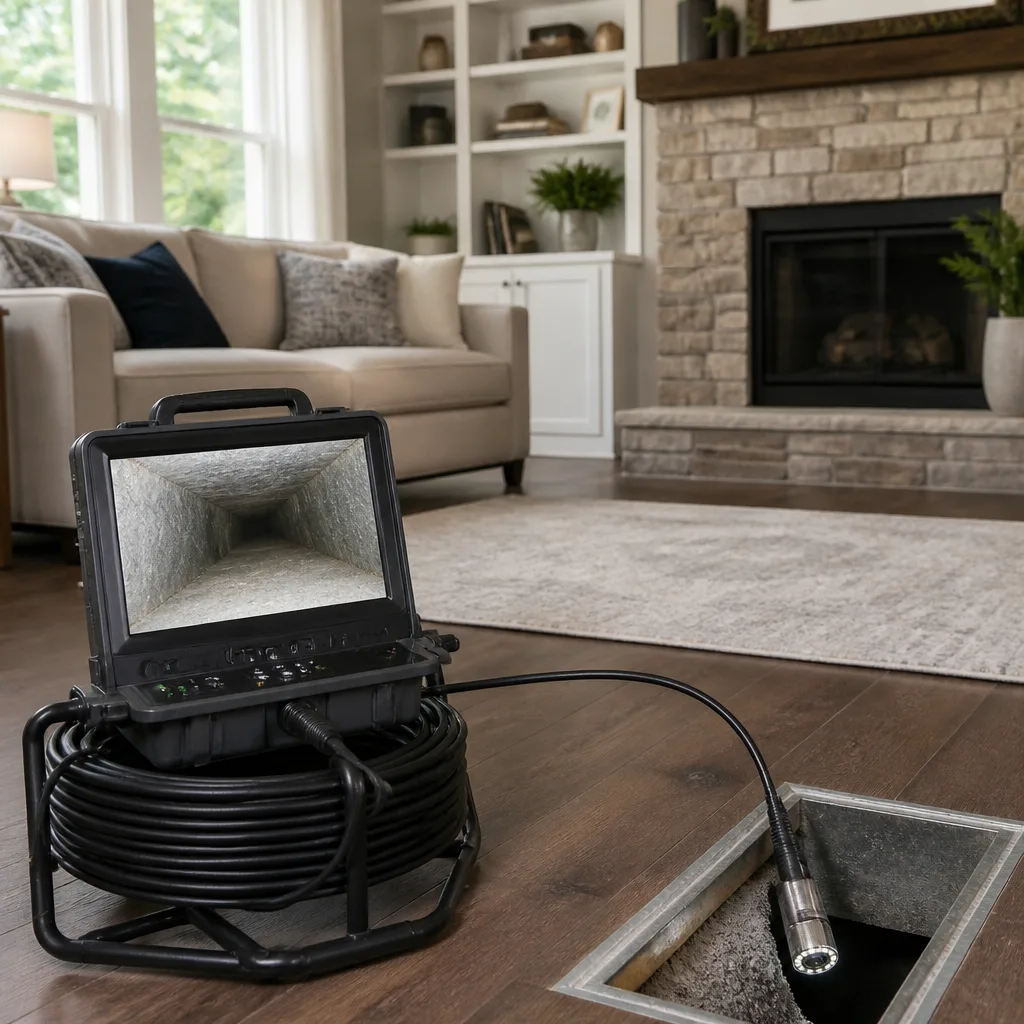 Camera inspection
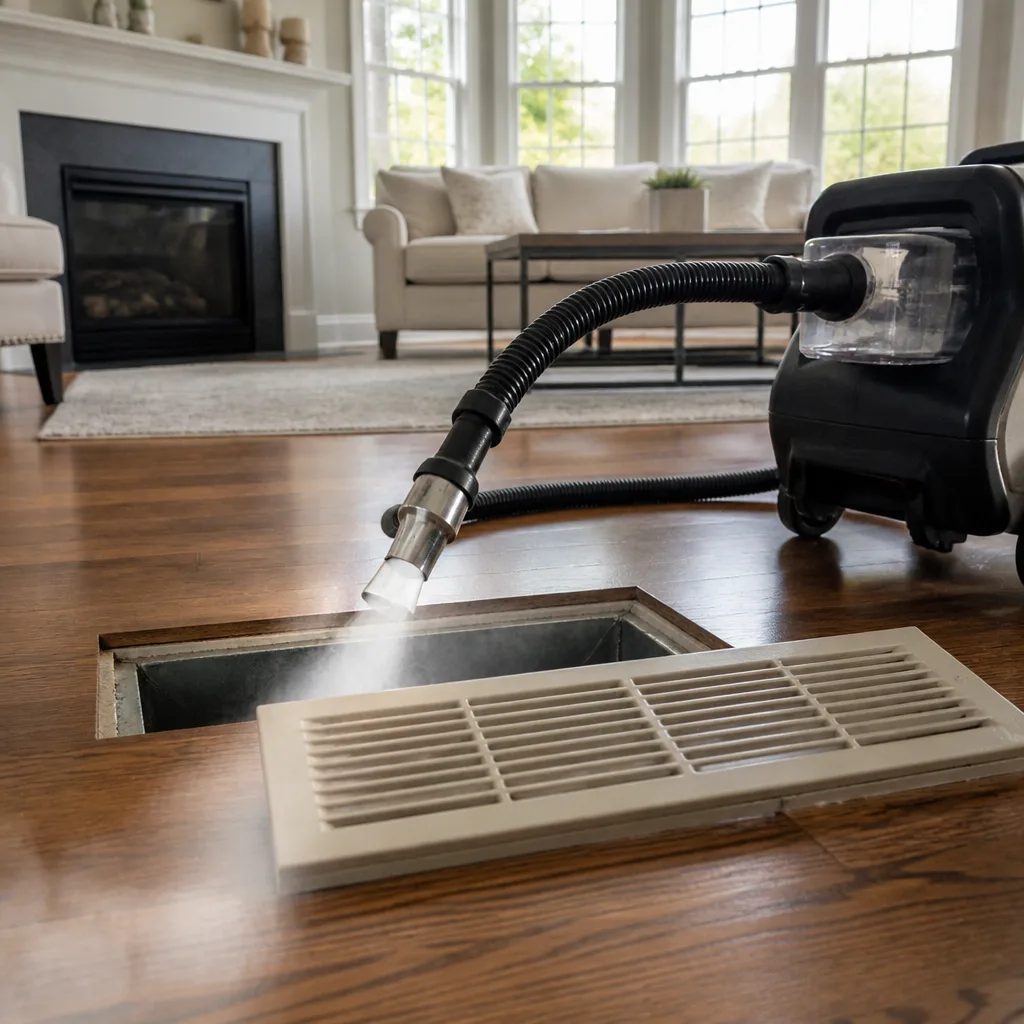 Sanitizing & deodorizing
Whole-system duct and dryer vent check with before-and-after photos - you see exactly what came out of your vents
That "$99 whole-house special" is a bait ad - the real number appears once they are in your hallway, or the "clean" is a shop-vac at the register. We photograph the inside of your ducts before and after instead.
Air Duct Cleaning Maintenance Checklist for Harvey Park Homeowners
Most people assume a duct system should be cleaned once a year, the way you’d change a furnace filter. The EPA doesn’t actually recommend routine annual duct cleaning. It recommends cleaning when specific, observable conditions are met: visible mold growth, vermin infestation, excessive debris, or a system that’s clogging and failing to move air properly. That’s a meaningful difference, and it changes how you should think about your ducts. Instead of waiting for a sales pitch to tell you it’s “that time again,” you can run your own monitoring protocol. This guide gives you the checks, the schedule, and the log that let you decide when cleaning is warranted and when it isn’t. Harvey Park homeowners can use every step of it.
Quick Answer
An air duct maintenance checklist isn’t a cleaning schedule. It’s a monitoring protocol. For most Harvey Park homes, that means three monthly checks (filter condition, register dust patterns, and musty odor at the first heat or cool cycle of the season), a quarterly check of blower access, static pressure at registers, and condensate drain clarity, plus event-triggered checks after renovations, pest intrusions, or a home purchase with unknown service history. You clean the system when your log shows the conditions warrant it, not on a calendar.
Styles & brands we work with
- Whole-home duct cleaning
- Dryer vent cleaning
- Camera inspection
- Sanitizing & deodorizing
Table of Contents
- The three checks you should run every month
- Quarterly checks: blower, static pressure, and condensate
- Annual indicators specific to Harvey Park
- Event-triggered checks: renovation, pests, and a new home
- What to log and keep on file
- What a professional inspection actually looks at
- Repair and sealing: the part most checklists leave out
- The second checklist: your dryer vent
The three checks you should run every month
A monthly walkthrough takes about ten minutes. You don’t need tools beyond a flashlight and your own eyes and nose. The point isn’t to clean anything; it’s to notice change.
- Filter condition. Pull the filter and hold it up to the light. A filter that looks like a gray felt mat across its whole face is overdue. A filter with uneven loading, dark patches on one side and clean on the other, tells you something about airflow through the return grilles and is worth noting in your log.
- Register dust pattern. Look at the supply registers and the ceiling or wall around them. A light, even haze is normal. A streak pattern radiating out from one register, or a dark ring around a grille, points to air escaping at a gap between the duct boot and the drywall. That’s a sealing issue, not a cleaning issue.
- Odor at the first heat or cool cycle. The first time your furnace or AC runs for the season, pay attention. A faint dusty smell that fades within minutes is normal dust burning off. A musty or damp smell that lingers, especially from a return grille, is the signal that matters most. In our experience, that smell is usually the first thing a homeowner notices before any visible problem.
Write the outcome of each check down. A check you don’t record is a check you’ll repeat or forget. If nothing changes month to month, you’re building the baseline that lets a professional give you an honest answer later.
Quarterly checks: blower, static pressure, and condensate
Four times a year, go a little deeper. These three checks catch the problems that develop slowly and don’t show up at your registers.
- Static pressure feel at registers. Hold your hand at each supply register with the system running. You’re not measuring with an instrument; you’re comparing registers to each other. If one register pushes noticeably less air than the rest, the branch feeding it may be restricted or disconnected. A disconnected duct in a crawlspace or attic runs silently and sends your cooled or heated air into the wrong space entirely.
- Blower compartment access inspection. With the unit switched off at the breaker, open the access panel and shine a light into the blower compartment. Look for dust buildup on the wheel blades, debris sitting in the bottom, or a filter that’s been installed loose and bypassing its frame. Don’t reach into the cabinet. Just look. If the blower wheel is caked in dust, that’s a sign the whole air pathway needs professional attention, not just a new filter.
- Condensate drain clarity. If you have central air, find the condensate drain line and its trap. Look for standing water, algae growth, or a line that’s been disconnected. A clogged drain is a water problem that can become a much larger one, and it takes a minute to check. Flush per the manufacturer’s instructions for your unit.
In a city with the kind of swing Harvey Park sees between summer heat and hard winter cold, the equipment runs through a wide range each year. Quarterly is frequent enough to catch changes without turning your house into a maintenance job.
Annual indicators specific to Harvey Park
Local conditions matter more than generic checklists admit. Harvey Park has two annual events that load your air system in predictable ways.
Wildfire smoke season. Colorado’s summer and fall smoke events push fine particulate into the outdoor air for days or weeks at a stretch. Your home isn’t sealed, so some of that comes inside, and a portion of it gets pulled into the return and deposited on the duct interior. After a heavy smoke season, check your filter more frequently than the usual monthly interval; a filter that loads up fast is a filter doing its job. If you smell smoke odor indoors well after an event has ended, or your filter loading is unusually heavy for the season, note it. High-efficiency filtration and professional sanitizing with remediation-grade equipment are the tools that address it.
Spring cottonwood. Harvey Park’s cottonwood trees release their seed fluff in late spring, and it collects fast. You’ll find it on window screens, on the porch, and inside return grilles when windows are open or a return is near a door. Cottonwood fluff is light, fibrous, and grabs fine dust as it goes. Check your return grilles after the first big cottonwood week; you’ll often find a matted layer on the grille face. That layer belongs on the grille, not in your ductwork, so it’s worth clearing.
Neither of these means you should automatically clean your ducts every year. They do mean you should note them in your log with dates.
Event-triggered checks: renovation, pests, and a new home
The calendar is the least reliable trigger for duct cleaning. Events are the most reliable. When one of these happens, run a full inspection rather than waiting for your next scheduled check.
- After a renovation. Drywall dust is the most aggressive contaminant most homes ever see. Sanding and cutting send fine gypsum powder into the air, and your HVAC system pulls it in through returns as it runs. Assume drywall dust entered the system and check the filter immediately after the job, then again a month later.
- After a pest intrusion. Rodent activity in a crawlspace, attic, or duct run leaves droppings, nesting material, and hair behind. That’s the kind of contamination a standard vacuum job doesn’t resolve; it requires remediation-grade filtration and sanitizing. A pest problem and a duct problem are linked whether or not you’ve made the connection yet.
- When you buy a home with unknown service history. If you’re a new Harvey Park homeowner and you don’t know when the ducts were last inspected, this is a genuine reason to have them looked at. Do it before you move furniture in, when access to every register is easy.
- After water damage. Any event that left standing water or high humidity near a duct run is a reason to look for moisture and odor inside the system, not just in the room.
Each of these events is a specific reason to inspect. “It’s been a year” is not.
What to log and keep on file
A log is the difference between a service recommendation you can evaluate and one you have to take on faith. Here’s what to record:
- The date of each check and a one-line result: “filter light haze,” “filter heavy, east register,” and so on.
- Filter changes, including the filter’s MERV rating. If your filter and your equipment call for different ratings, you’ll want to know that when you call someone.
- Anything you smelled, when, and from where.
- Any renovation, pest activity, or water damage and the date.
- Any professional work done, what was found, and whether the system was repaired and sealed afterward.
With a log in hand, a technician can give you a service recommendation grounded in what you’ve observed and when. Without one, they’re working from their own eyes on the day of the visit, and you’re in no position to compare. This is exactly the situation that leads to default upsells: a homeowner with no information gets steered toward whatever a company sells most. A log shifts that conversation.
What a professional inspection actually looks at
A real inspection isn’t a look at one register and a price. It’s a walkthrough of the full air pathway: the returns, the supply runs, the trunk line, the boot connections at each register, and the air handler itself. We use professional-grade tools for that inspection, including rotary contact cleaning equipment and remediation-class filtration, so the inspection tells you what’s actually there.
The difference in equipment matters. A shop vacuum pulled up to a register cannot dislodge debris bonded to the inside of a duct wall. Rotobrush and Nikro rotary contact cleaning physically agitates that buildup so it can be removed; a vacuum alone can’t. That’s the line between a pass with a hose and an actual cleaning.
What a competent inspection reports:
- Whether the duct interior shows visible buildup, and how heavy it is.
- Whether any connections are loose or disconnected, particularly in the attic or crawlspace.
- Whether the air handler and blower show dust buildup or bypassing around the filter.
- Whether there’s any sign of moisture, condensation, or pest activity inside the system.
- Whether the returns need better filtration than they currently have.
If you’re in Harvey Park and your home has never been inspected, air duct cleaning is the service to start with, and it begins with the inspection rather than pre-selling the cleaning.
Repair and sealing: the part most checklists leave out
Here’s the gap in most duct maintenance checklists: they end at cleaning. Cleaning only addresses contamination. It does nothing for a leaky duct system, and a leaky system is where a lot of your heating and cooling money goes.
If your quarterly check found a register with low airflow, or your monthly check found that streak pattern around a grille, or a technician found a disconnected boot in the crawlspace, the fix isn’t a second cleaning. It’s repair and sealing. We handle both in the same visit. A disconnected run gets reconnected, gaps between the boot and drywall get sealed, and the cleaning ends with a system that’s actually delivering air where it should.
This matters in Harvey Park’s older housing stock in particular, where additions, retrofits, and years of small modifications can leave ductwork patched together. Sealing those gaps means your equipment moves less air through leaks and more through the rooms. We do this work as part of our HVAC cleaning scope rather than sending you to a separate contractor to finish the job.
The second checklist: your dryer vent
Your dryer vent is a separate air system from your HVAC system, and it has its own checklist. A clogged dryer vent is a fire risk and it’s the one duct in your house that lint restricts every single week. Run these checks monthly:
- Touch the outside of the dryer while it’s running. It should feel warm, not hot.
- Check the load. If clothes take noticeably longer than they used to, airflow is reduced.
- Look inside the outside vent hood. You should see a clear air path, not matted lint.
- Check the transition duct behind the dryer for kinks, crushing, or buildup.
If any of those checks turns up lint, get the vent cleared. Our dryer vent cleaning pulls the whole line through rather than cleaning only the reachable end, and it’s a documented fire-risk reduction rather than an add-on we offer because it’s easy.
Common Mistakes to Avoid
- Cleaning on a calendar instead of on evidence. An annual cleaning isn’t a maintenance plan; it’s a bill. Clean when your log shows buildup, moisture, pest activity, or reduced airflow, and not before.
- Trusting a quote given before anyone has seen the system. A price quoted from a phone call or from the curb is a price based on nothing. An honest estimate comes after someone has looked at the ducts, the air handler, and the connections.
- Skipping the compressor-off step before opening anything. Opening the blower compartment with the system live is how a maintenance check turns into a service call. Turn off the breaker every time.
- Reusing the same filter past its loading. In a heavy smoke season or after a renovation, a filter loads up faster than the package says. Check it, don’t just trust the interval.
- Cleaning and not sealing. If a repair is found and skipped, the leak stays and the dusty pattern comes back within months. Fix the air pathway, not only the contamination.
- Assuming a new filter fixes a musty smell. It usually doesn’t. Odor that persists after a filter change points to moisture or microbial growth inside the system, not in the filter.
- Forgetting the dryer vent. It gets surveyed less than the HVAC ducts and causes more fires. It belongs on the same checklist.
See the difference
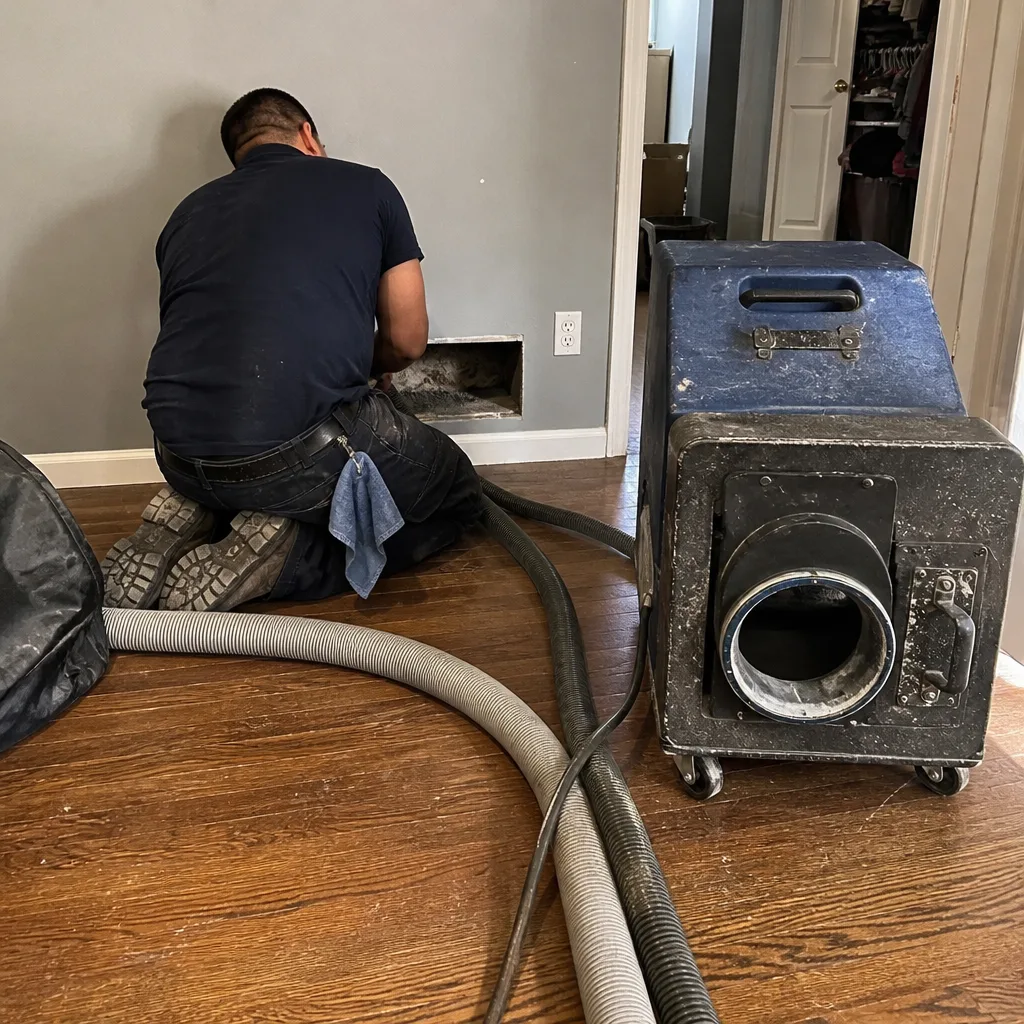 Before
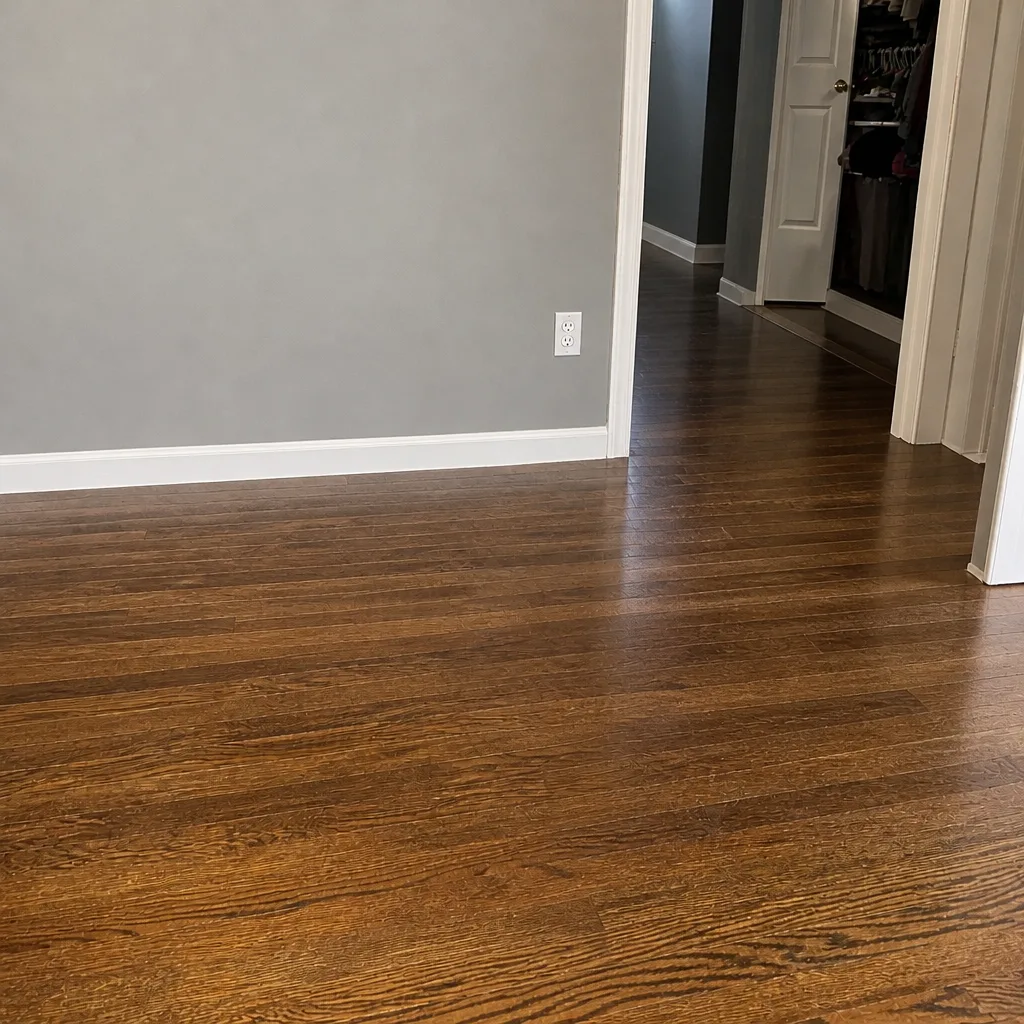 After
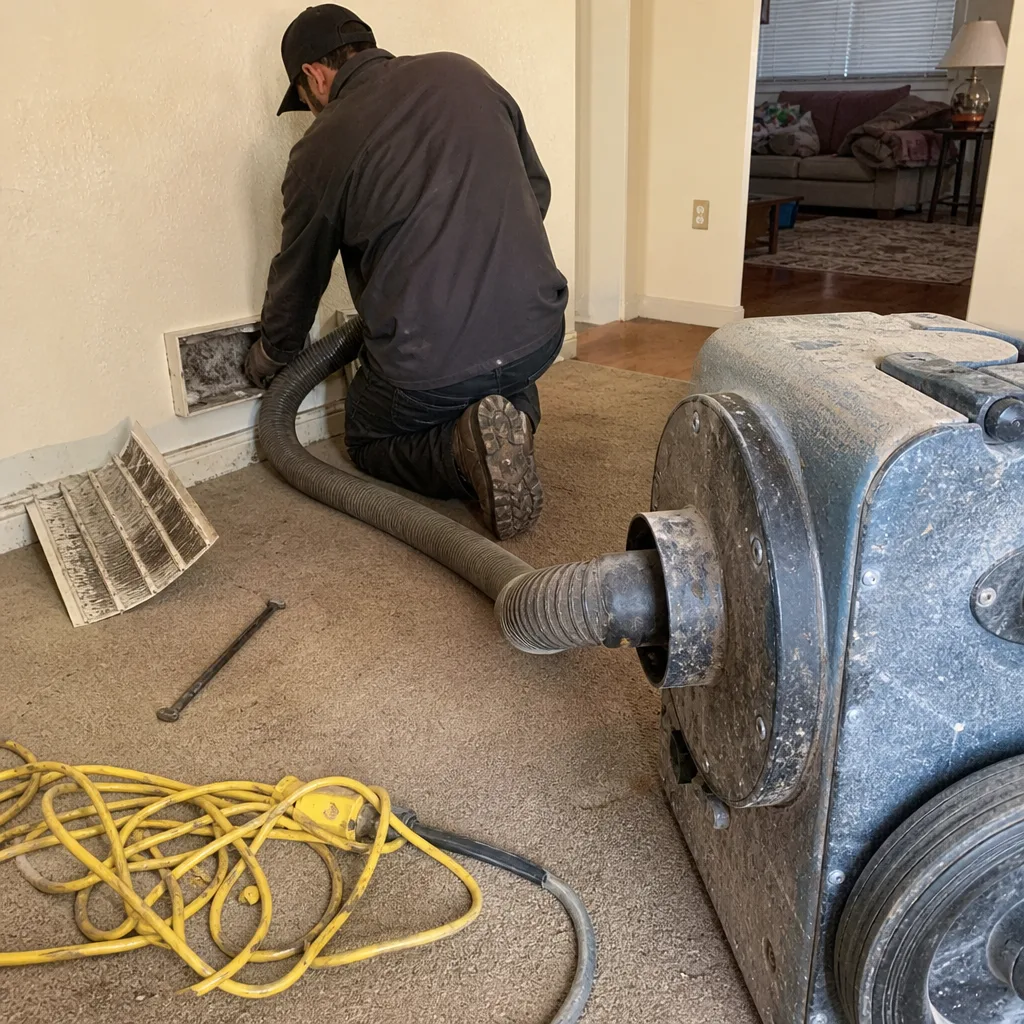 Before
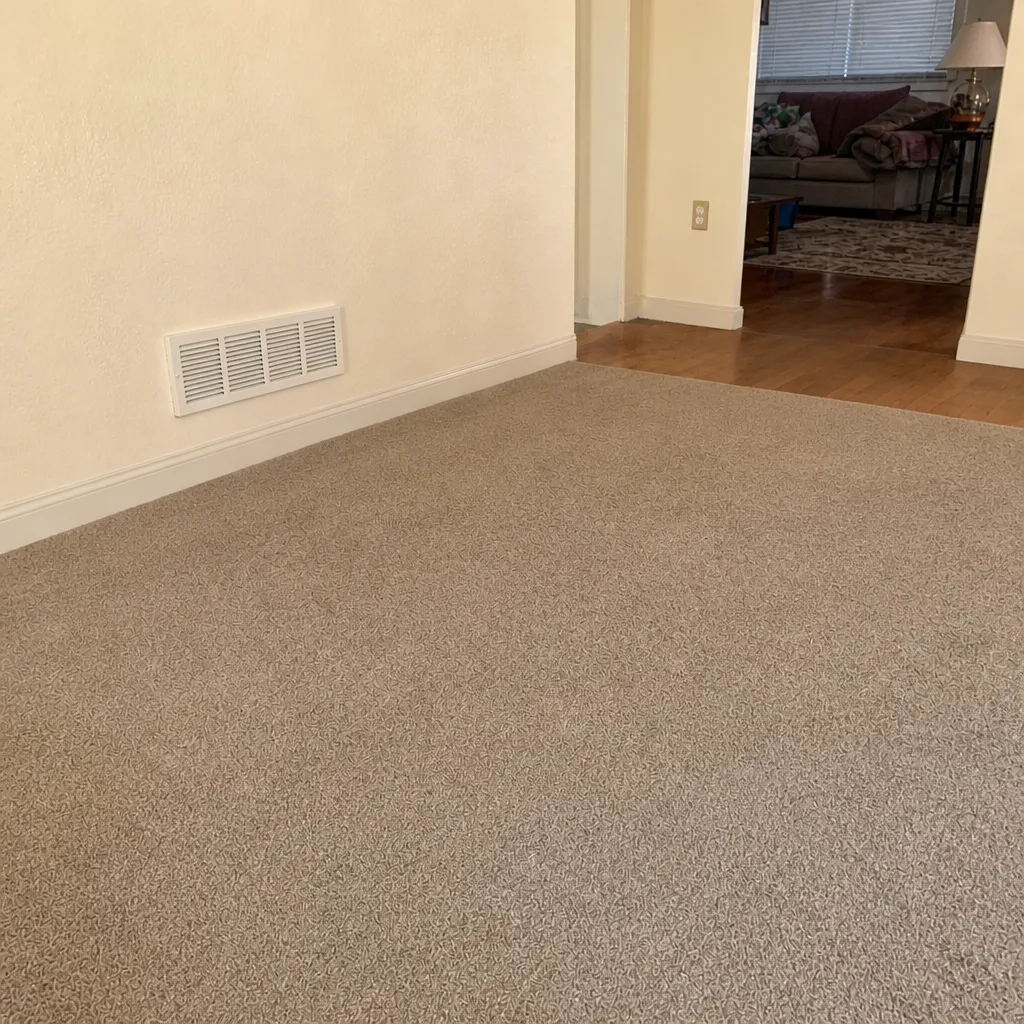 After
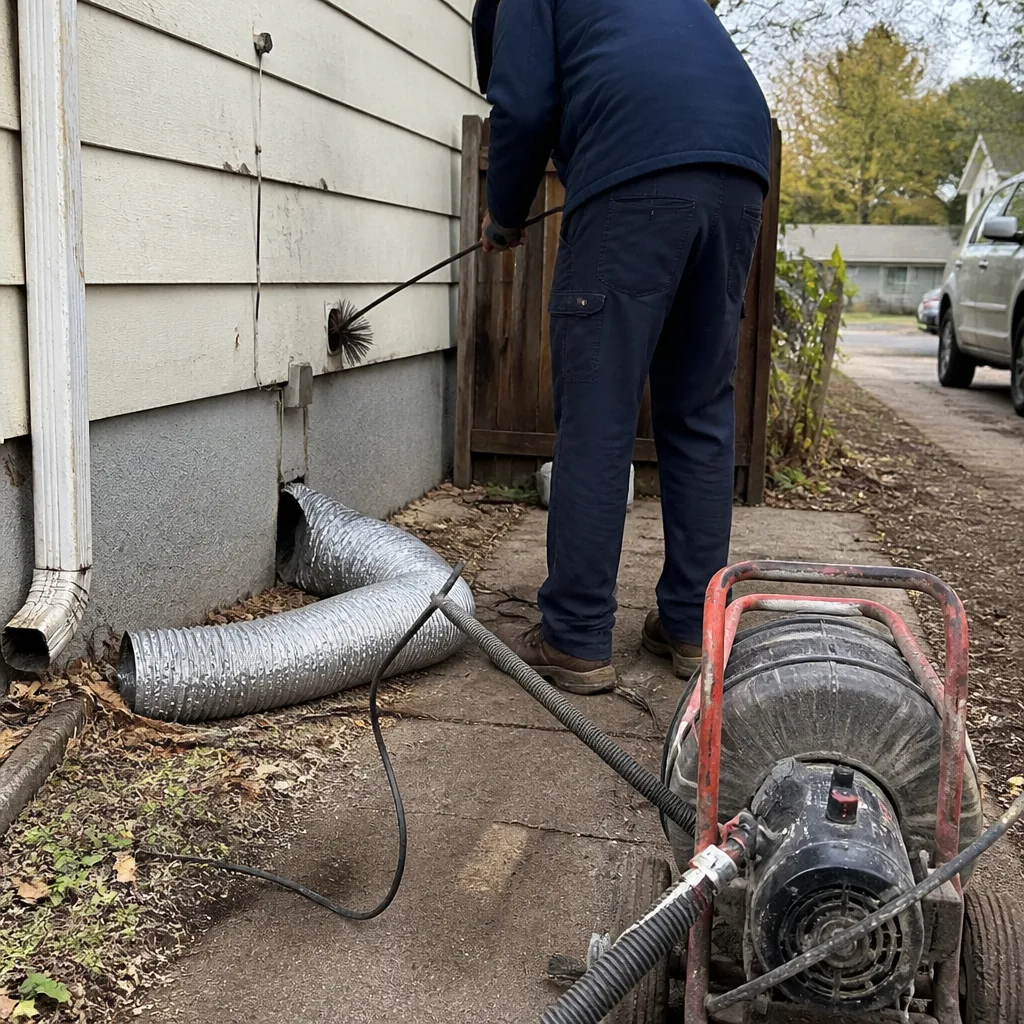 Before
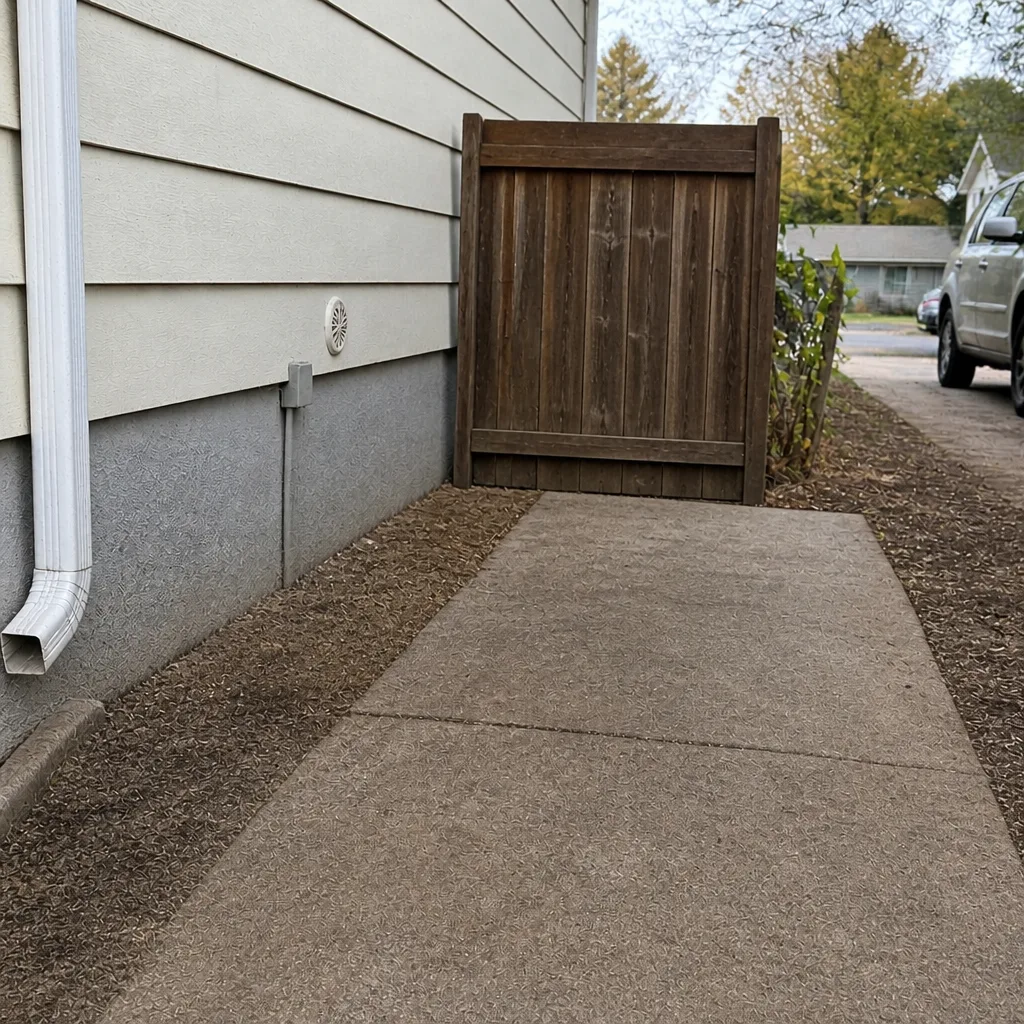 After
When to Call a Professional
Run the checks in this guide yourself. Call a professional when the checks turn up something you can’t resolve by changing a filter or clearing a grille: persistent musty odor anywhere in the system, a register with clearly reduced airflow, a run you believe is disconnected, visible debris inside a supply or return, evidence of pest activity, or any sign of moisture inside ductwork. Those are the conditions where cleaning, repair, or sanitizing matters, and where the work needs professional equipment. Air Duct Cleaning Harvey Park offers free estimates in Harvey Park. Call (833) 660-4969. We answer 24/7. Fast dispatch from 7am to 7pm, Sunday through Friday.
Frequently Asked Questions
Most homes don’t need duct cleaning on a fixed schedule at all. Rely on your log: clean when you see visible buildup, smell persistent odor, find moisture or pest evidence, or notice reduced airflow. In Harvey Park, high wildfire-smoke seasons and spring cottonwood can justify a check after those events even if a full cleaning isn’t warranted.
Filter loading, register dust patterns, and any new odor when the system first runs. Those three checks take minutes and catch most developing problems early. Log each result so you’re comparing against your own baseline rather than against what a salesman says is normal.
Only if the conditions call for it. Cleaning a system that doesn’t need it doesn’t improve air quality or airflow. Cleaning one that has visible buildup, moisture, or pest intrusion does. The right approach is to check first, then clean based on what the check found.
Persistent musty odor, a filter that loads up unusually fast, visible streaks around supply registers, weak airflow at one register, or any recent renovation or pest activity. If you’ve just moved into a house with unknown service history, that’s a reason to inspect before you settle in. Call (833) 660-4969 for a free estimate.
You can clean the reachable surface at each register and grille, and you should replace filters on schedule. You can’t reach the duct interior, and a shop vacuum can’t dislodge bonded buildup. When the checks point to interior buildup, moisture, or pest activity, the work needs professional equipment. Rotary contact cleaning and remediation-grade filtration aren’t things a homeowner can replicate.
Pricing depends on the size and configuration of your system and on whether repair or sealing is needed. The written estimate should be for the whole system rather than a per-vent figure, and it should be agreed before work begins. Ask for before-and-after photos of your own ducts as part of the job. Call (833) 660-4969 for an exact quote; estimates are free.
The Bottom Line
The useful version of duct maintenance is a monitoring protocol, not a cleaning routine. Three monthly checks, three quarterly checks, two seasonal events specific to Harvey Park, a handful of event triggers, and a log. Do those, and you’ll know when cleaning is justified and when an offer to clean your ducts is a sale rather than a necessity. Your log also shifts the conversation with any contractor you call: a company that inspects and repairs as part of the job can point to what it found, while a company that sells a default cleaning will sell you a default cleaning. Run the checks, keep the log, and call when your own records tell you it’s time.
Written by the team at Air Duct Cleaning Harvey Park.