
Last updated November 24, 2026
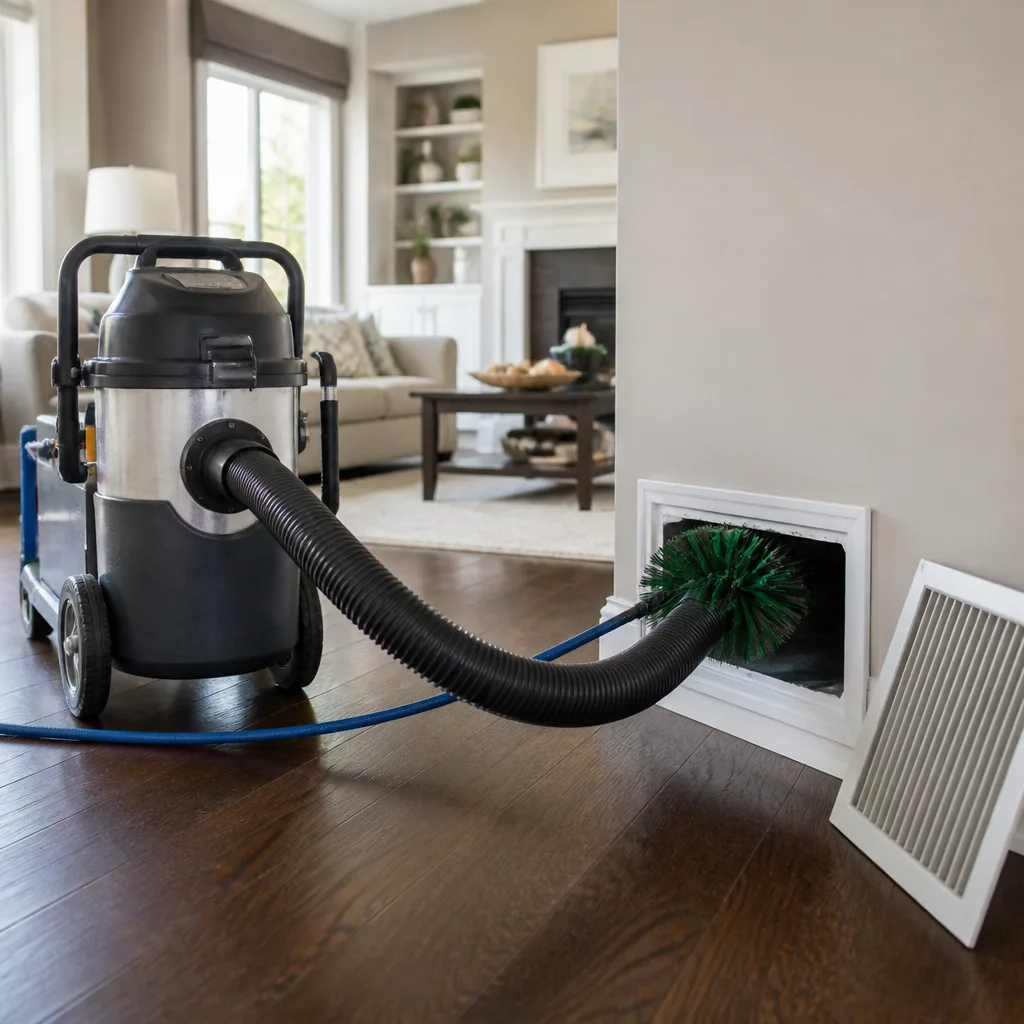 Whole-home duct cleaning
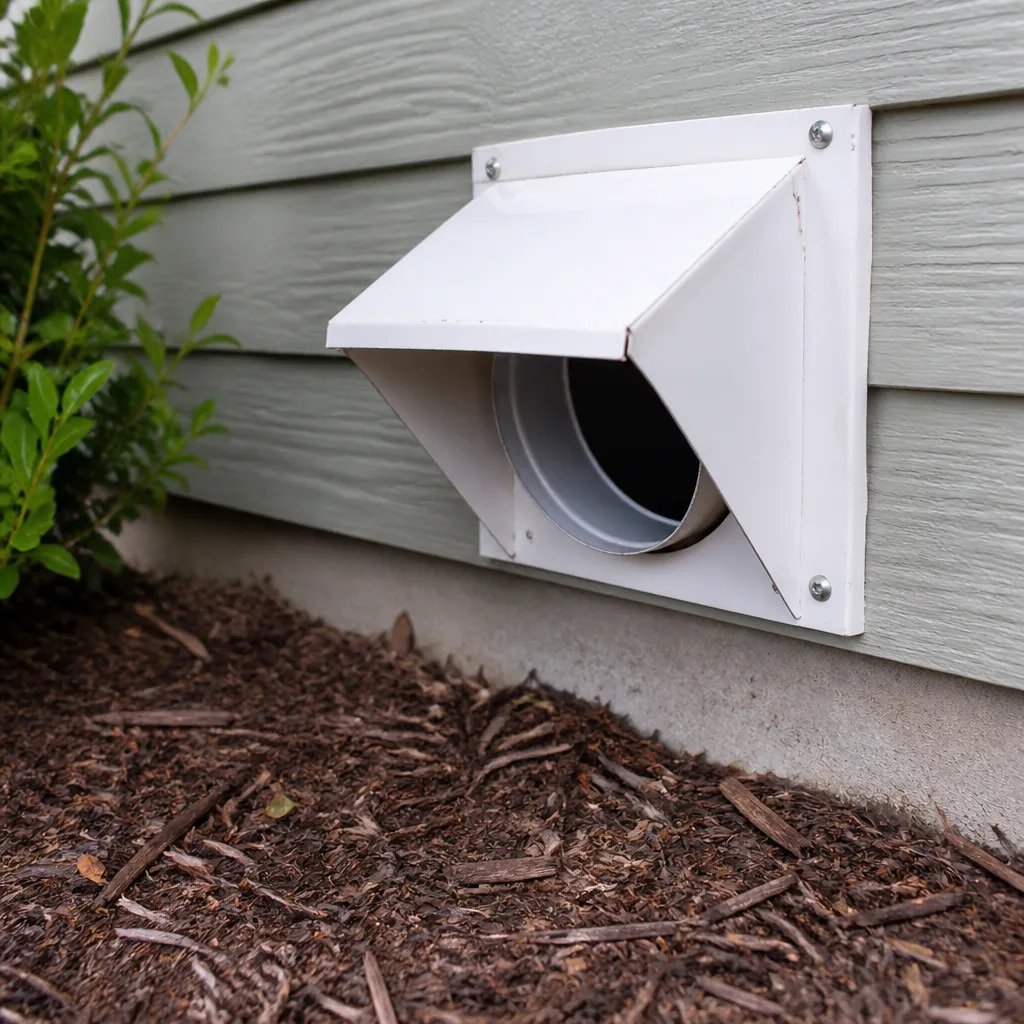 Dryer vent cleaning
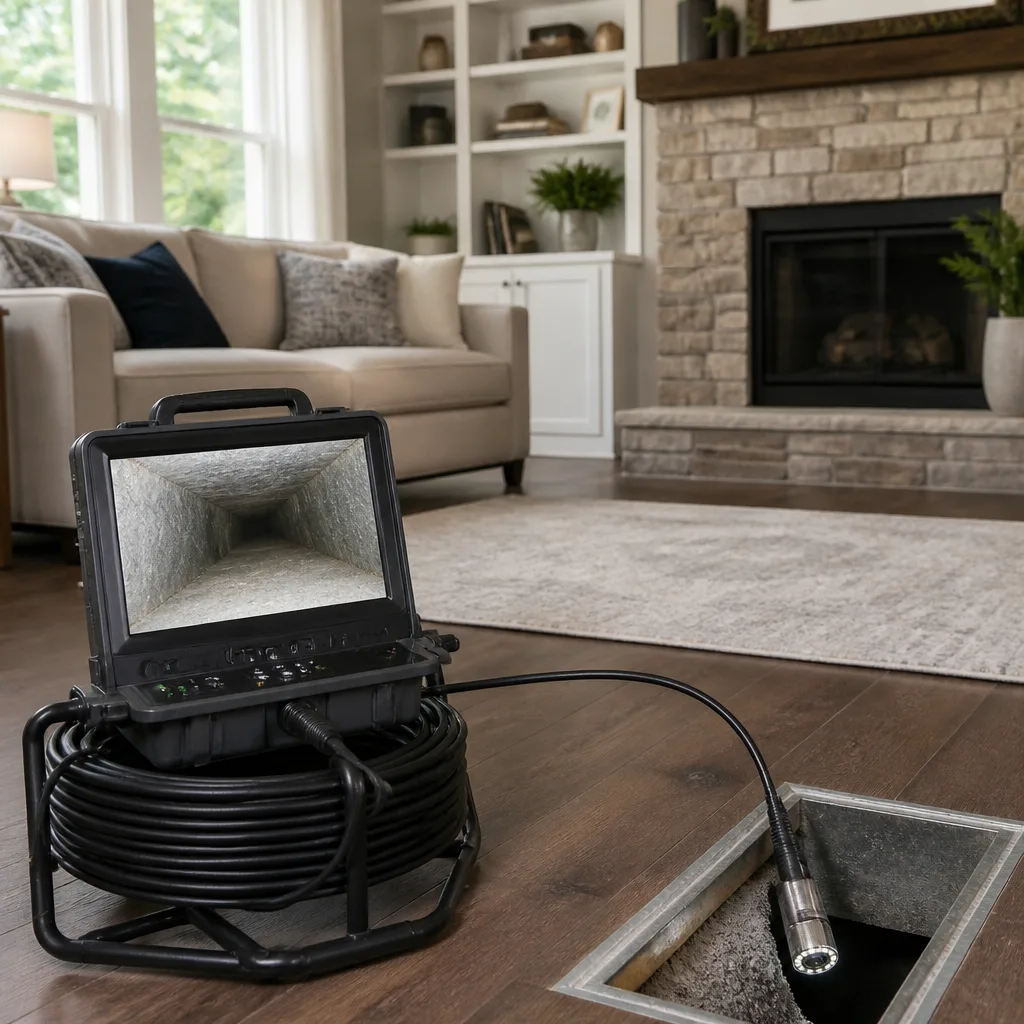 Camera inspection
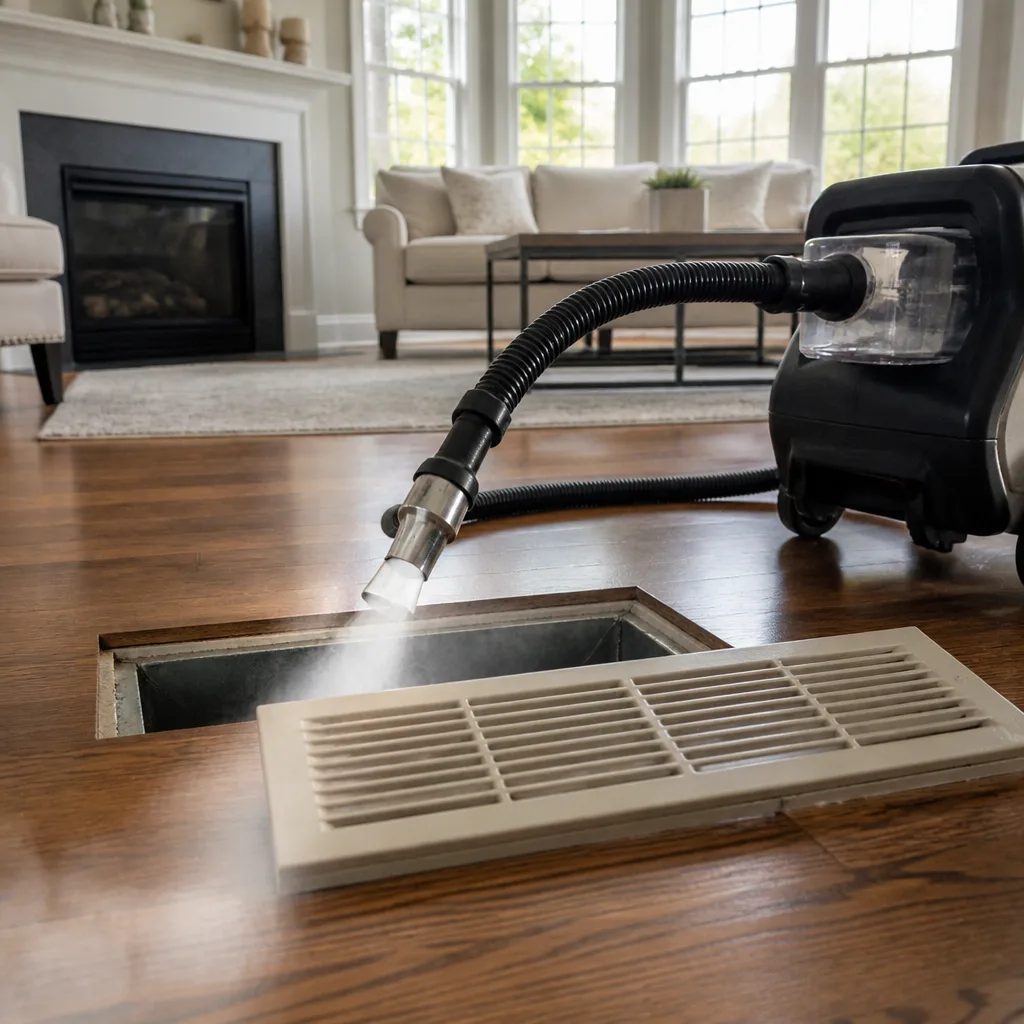 Sanitizing & deodorizing
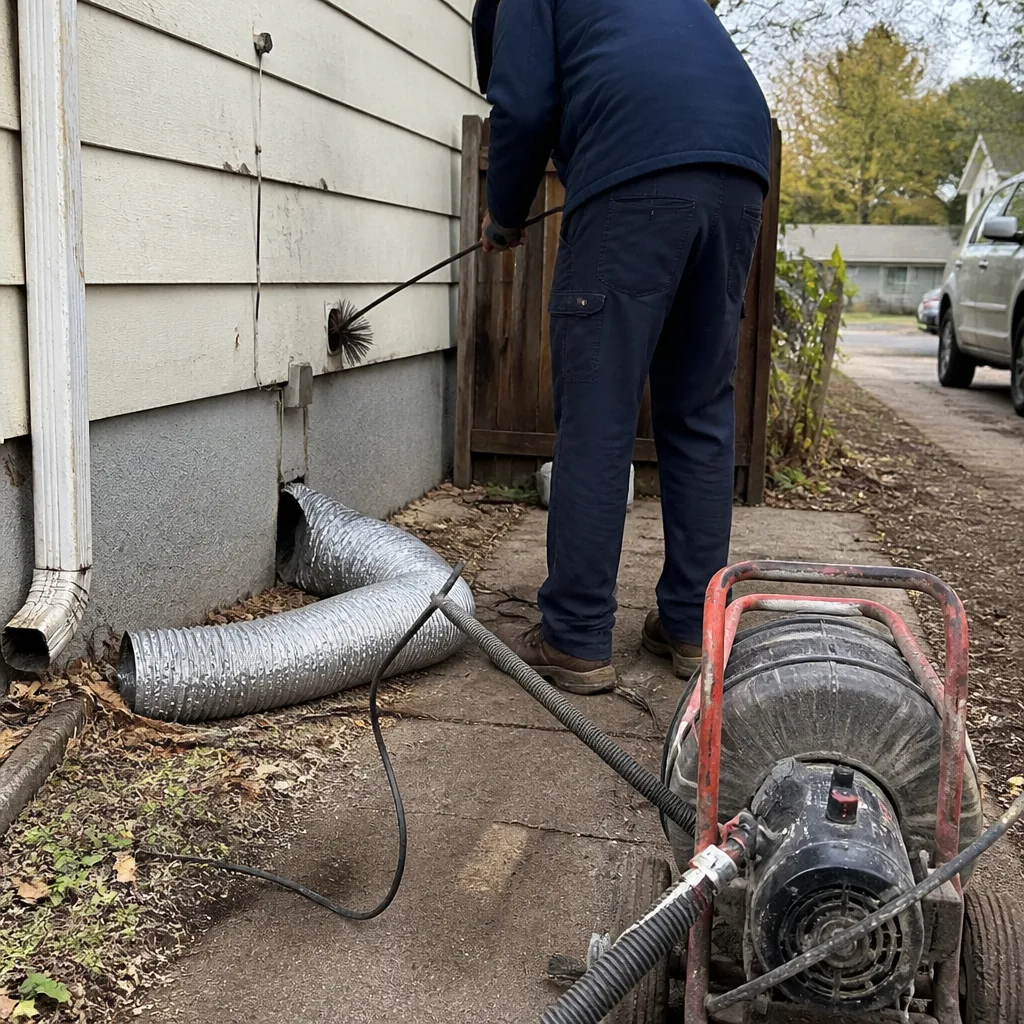
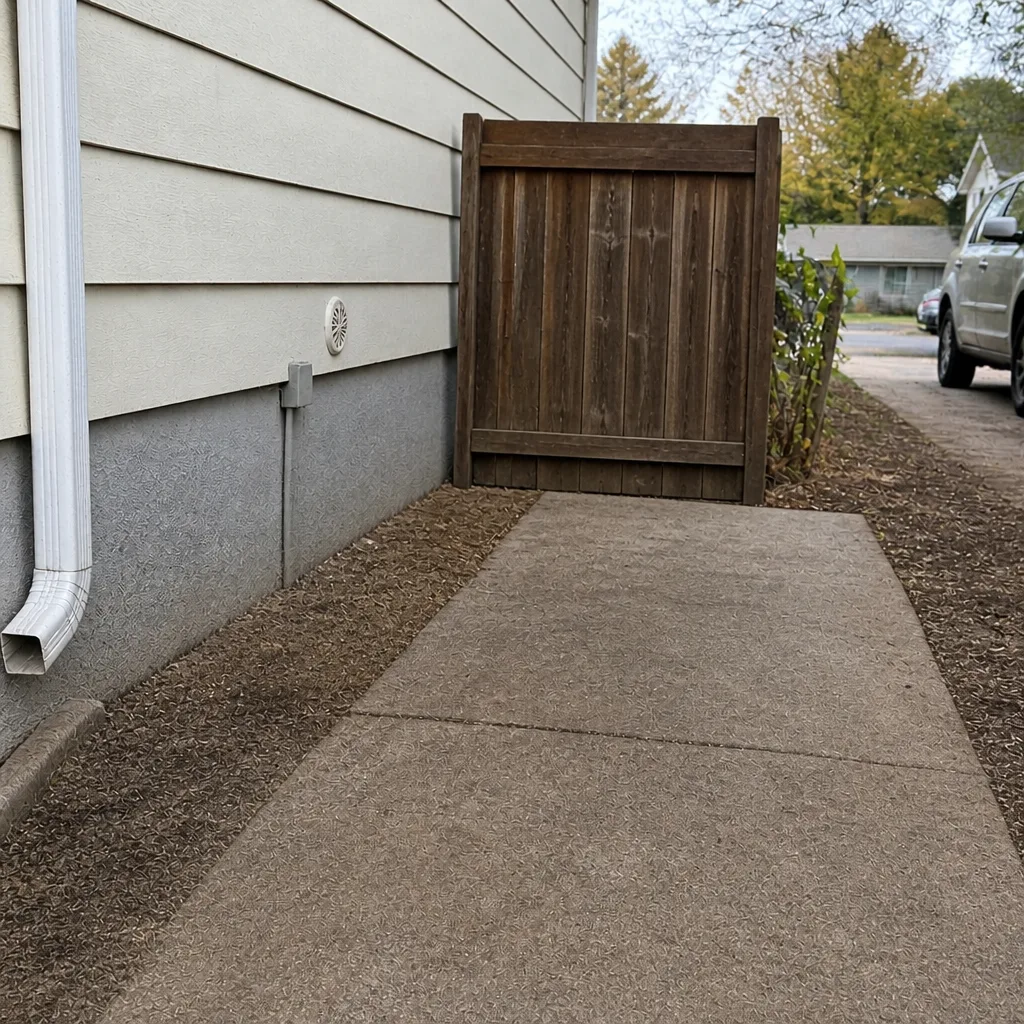
Whole-system duct and dryer vent check with before-and-after photos - you see exactly what came out of your vents
That "$99 whole-house special" is a bait ad - the real number appears once they are in your hallway, or the "clean" is a shop-vac at the register. We photograph the inside of your ducts before and after instead.
Air Duct Cleaning Cost Breakdown: The Harvey Park Homeowner’s Reference for 2026
Here’s the part of duct cleaning pricing that catches almost everyone off guard: the two quotes in your inbox may look like they describe the same job, and they usually don’t. A per-vent bid at $25 to $35 per register and a flat $650 system rate can sound like a $200 versus a $650 decision, when really they’re two different scopes of work wearing the same name. The average Harvey Park home has somewhere between 18 and 26 supply and return registers, and that count alone changes what a “full system” even means. This guide breaks 2026 Denver-metro pricing into tiers, explains what each tier actually includes, and shows you how to read a quote as a scope checklist instead of a number to beat.
Quick Answer
Air duct cleaning in Harvey Park and the wider Denver metro in 2026 typically runs from about $99 to $299 for a thin entry-level service, $300 to $650 for a genuine mid-range whole-system cleaning, and $650 to $1,200+ for full-system work that includes repair, sealing, and sanitizing. Price without scope means nothing, so compare quotes on what’s included, not the bottom line. The written estimate you receive before work starts is what sets the final price.
Styles & brands we work with
- Whole-home duct cleaning
- Dryer vent cleaning
- Camera inspection
- Sanitizing & deodorizing
Table of Contents
- What the Three Price Tiers Actually Include
- What Drives the Cost of Your Specific Job
- Your Home’s Layout and Duct Material in Harvey Park
- Add-Ons Worth the Money and Add-Ons That Aren’t
- How to Compare Competing Quotes on Equal Terms
- Red Flags in Pricing and Scope
- Common Mistakes to Avoid
- Frequently Asked Questions
What the Three Price Tiers Actually Include
The price ranges in this guide are typical estimates for the Denver metro. They are not promises and they are not a menu; every home is different, and a written estimate is what counts. What follows is what usually separates one tier from the next.
Entry-Level: $99 to $299
This is a hook price, and it usually covers one trunk line plus a handful of registers, or a single-vent-per-room pass. Contact cleaning of the full duct path is often not part of it, and neither is any inspection, sealing, or sanitizing. In a Harvey Park home with 20-something registers, a $99 offer usually means the contractor has priced a much smaller scope than you assumed. That isn’t automatically a scam, but it has to be read for exactly what it is.
Mid-Range: $300 to $650
This is where real whole-system cleaning lives. You should expect rotary-brush contact cleaning of the supply and return runs, a vacuum pulled on the system to keep dust contained, and a basic inspection of what was found. The equipment matters here: a professional rotary-brush system physically agitates and lifts buildup off the duct wall, which a shop-vac rig doesn’t do. Ask what machine the contractor is bringing before you compare price. If they can’t name it, that tells you something.
Full-System: $650 to $1,200+
This tier adds the work that makes the cleaning stick: sealing leaks found during the job, sanitizing with remediation-grade filtration, coil cleaning, and camera inspection of the duct runs. It’s the tier that folds repair and air quality into the same visit instead of handing you off to a second contractor. Harvey Park homes with original 1950s and 1960s ductwork often land here once a camera finds flex runs that have come loose or joints that never got sealed.
What Drives the Cost of Your Specific Job
Two homes on the same Harvey Park block can get quotes $400 apart, and it’s rarely the contractor being greedy. Here are the four variables that move the number.
Home Size and Register Count
Register count is the honest unit of measure. A single-story ranch with 18 registers takes less time than a split-level with 26. Per-vent pricing hides this, because it invites a low teaser for the first handful of vents and a big delta for the rest. Whole-system pricing is more transparent when the scope is stated clearly.
Duct Material
Sheet metal is the easiest to clean and to repair. Flex duct cleans well when it’s intact but is fragile, and a torn flex run has to be replaced, not just cleaned. Fiberboard duct is the wildcard: it can shed fibers and often needs a different approach than a rotary brush alone. If your contractor doesn’t ask what material your ducts are made of, they haven’t thought about your job yet.
System Age and Access
Original ductwork in Harvey Park’s 1950s and 1960s housing stock is a mix of sheet metal, flex, and fiberboard, and some of it has never been sealed. Add a crawlspace run or a chase that requires cutting an access panel, and the labor goes up. Access difficulty is legitimate; it’s also where a bid can quietly balloon if it wasn’t agreed up front.
What You Actually Want Done
Cleaning alone is one scope. Cleaning plus sealing plus sanitizing is another. Both are honest; they are not the same price, and a quote must say which one you’re getting. For a fuller picture of what these services involve, see our Air Duct Cleaning Harvey Park page.
Your Home’s Layout and Duct Material in Harvey Park
Harvey Park’s housing stock is not the same as a new-build subdivision in the suburbs, and that matters for cost. The neighborhood’s ranch and split-level homes, built largely in the 1950s and 1960s, were designed with ductwork that sits in a crawlspace or attic rather than a conditioned basement. That layout has two practical consequences for pricing.
First, access. A duct run in a tight crawlspace or roof chase can add a couple of hours of labor to an otherwise routine job, and that’s a real, defensible reason for one quote to sit $150 above another. Ask any contractor to specify how they’ll access the runs before you compare price.
Second, sealing. Older sheet metal in Harvey Park homes was often installed with joints that were never taped, or tape that has since dried and let go. When a cleaning job reveals leaks, sealing them is a separate, priced scope. We can repair and seal what we find instead of sending you off to book another contractor; that’s a full-system scope and it should be quoted as one.
Colorado’s dry air means duct systems here see a lot of dust cycling through, and a Harvey Park home with a forced-air furnace will typically want cleaning more often than one in a humid climate. That’s a real reason to think about your system’s history rather than a scare line. If you already know you want to extend a cleaning into a repair, our HVAC cleaning service covers the furnace side of the same system.
Add-Ons Worth the Money and Add-Ons That Aren’t
Some add-ons have real cost justification and some exist to pad the invoice. The test is simple: does the add-on address something you can see or measure?
Legitimate Add-Ons
- Coil cleaning: The evaporator coil is where airflow restriction lives, and cleaning it directly affects how hard your HVAC works. Real justification.
- Sanitizer application with remediation-grade filtration: Legitimate when there’s mold, mildew, or a contaminant concern. We use Abatement Technologies equipment, the same class of machinery used in abatement projects, and negative-air capability is what makes the sanitizer meaningful.
- Camera inspection: Worth the spend when access is limited or you suspect a collapsed flex run. It turns a guess into a scope.
- Dryer vent cleaning: This is a separate service and a genuine fire-safety item, not an upsell to bolt onto a duct job. Clogged dryer vents are a documented fire hazard, and clearing them completely is a distinct scope. Our dryer vent cleaning detail explains what’s involved.
Add-Ons to Question
- Sealing or coating the duct system when no inspection found a problem to seal.
- A sanitizer charge that arrives without any filtration or documented concern behind it.
- Any “air quality package” that isn’t tied to a specific issue you can see or measure.
Whole-home air quality products from Aprilaire and Honeywell are a separate question from cleaning: they’re a genuine upgrade for filtration and humidity, not a cleaning add-on, and we service and stock the leading brands rather than treat a cleaning as the end of the conversation.
How to Compare Competing Quotes on Equal Terms
Treat competing quotes as scope checklists, not price lists. A quote that names all of the following is comparable; one that leaves any of it out isn’t.
- Register count in writing. “Full system” means nothing without a number. Ask them to list how many supply and return registers the price covers.
- Equipment named. Rotary-brush contact cleaning versus a vacuum-only pass is the difference between removing buildup and stirring it up. Ask for the machine.
- Sealing and repair included or not. This is the single biggest scope gap. Get it in writing.
- Sanitizing scope. What’s applied, and with what filtration running during the job.
- Before-and-after photos. A contractor who plans to photograph the job for you is a contractor who expects to be held to a standard.
Once all five points are on the table, you’re comparing apples to apples. That’s a full-system conversation, and it’s how we quote. A written estimate sets the final price before work starts.
Red Flags in Pricing and Scope
The single most useful red flag for a Harvey Park homeowner: any quote under $300 for a home over 1,500 square feet deserves a scope conversation before you book. It’s not automatically wrong, but it usually prices a much smaller job than the one you described. Other signals to check:
- Per-vent pricing that starts with “the first one is $X”. The teaser price is the hook; the real number arrives later.
- No write-up before the truck rolls. If it isn’t in a written estimate, it isn’t agreed.
- A cleaning visit that ends with a mandatory add-on you didn’t ask for. Repair found during a job is legitimate; it should still be priced and agreed before it happens.
- No equipment detail. Consumer-grade vacuums sold as professional cleaning is a classic.
- No photos of your own ducts. If you can’t see what changed, you can’t tell whether the work was done.
Our technicians have up to 12 years of experience across the full set of services, and that experience is the reason we can quote a whole system in one scope rather than price the cleaning and then surprise you on the invoice.
See the difference
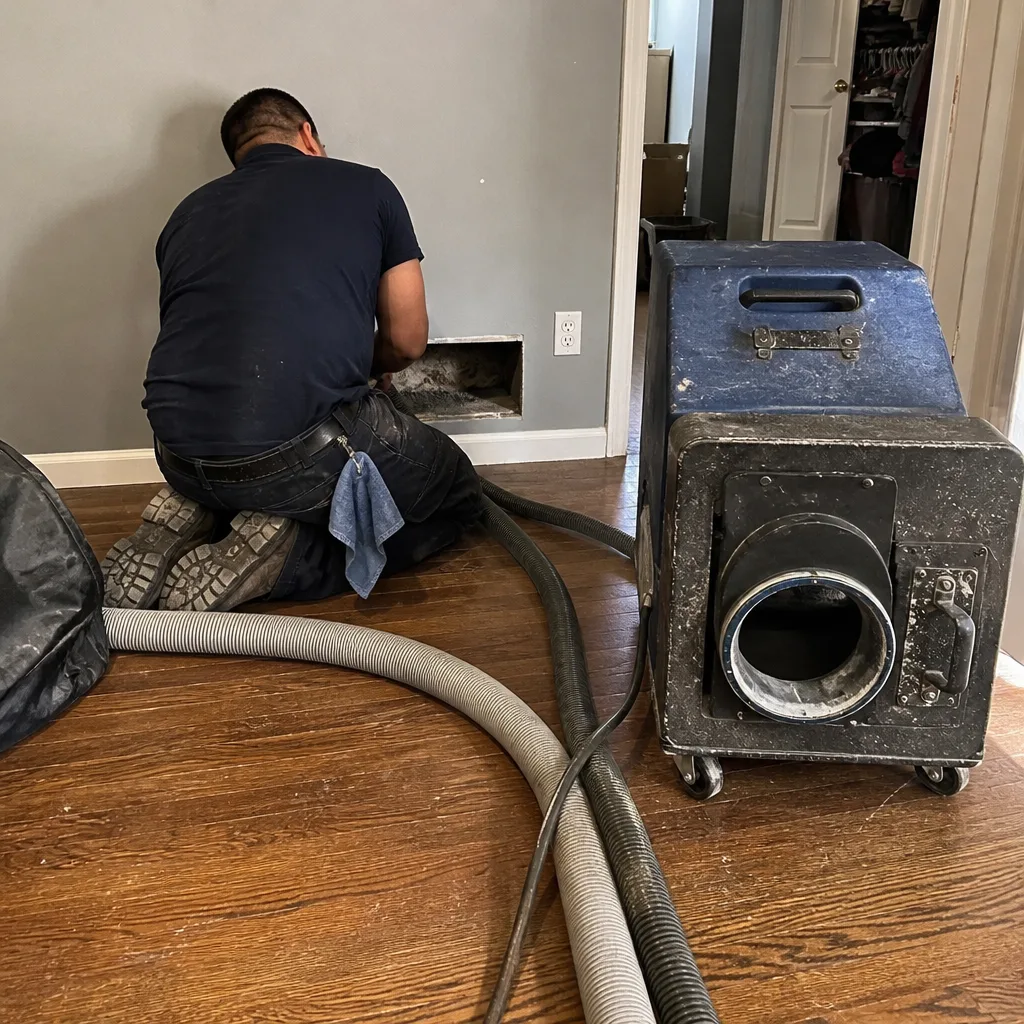 Before
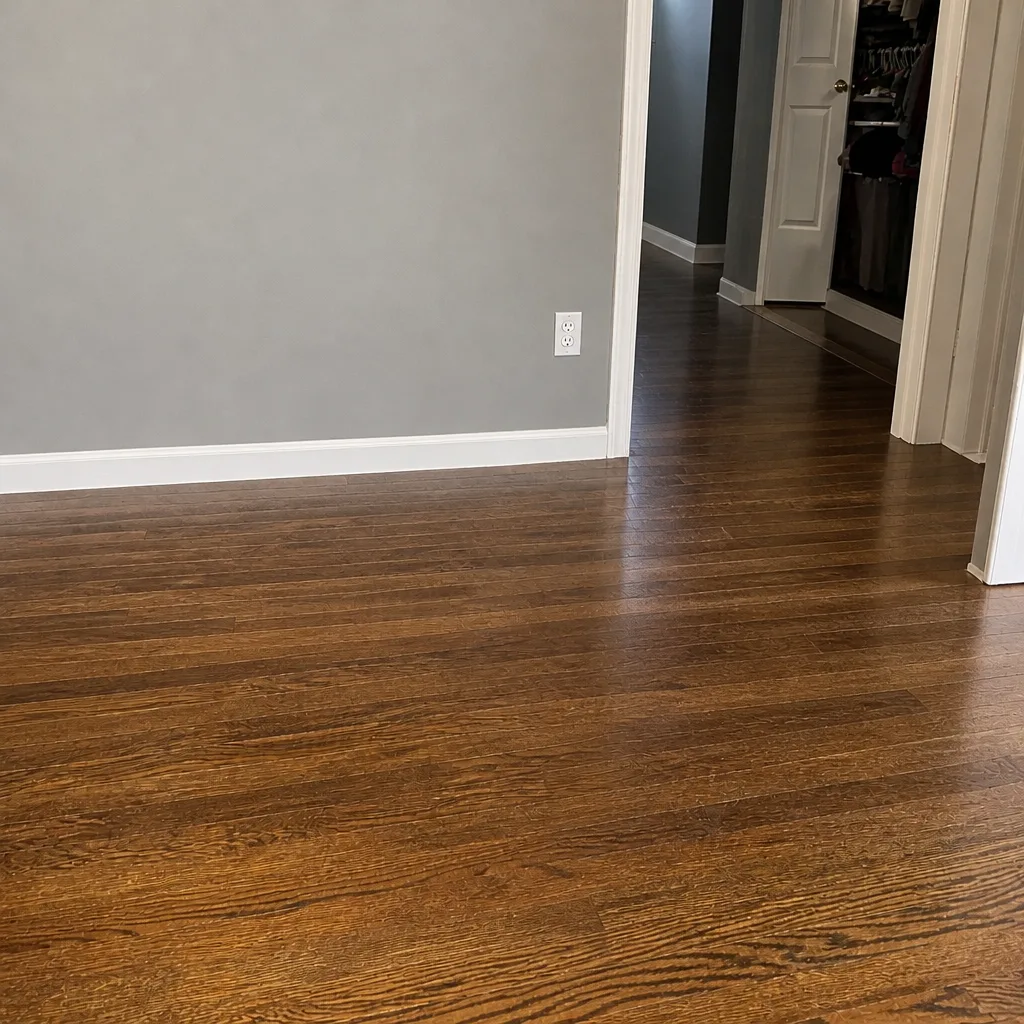 After
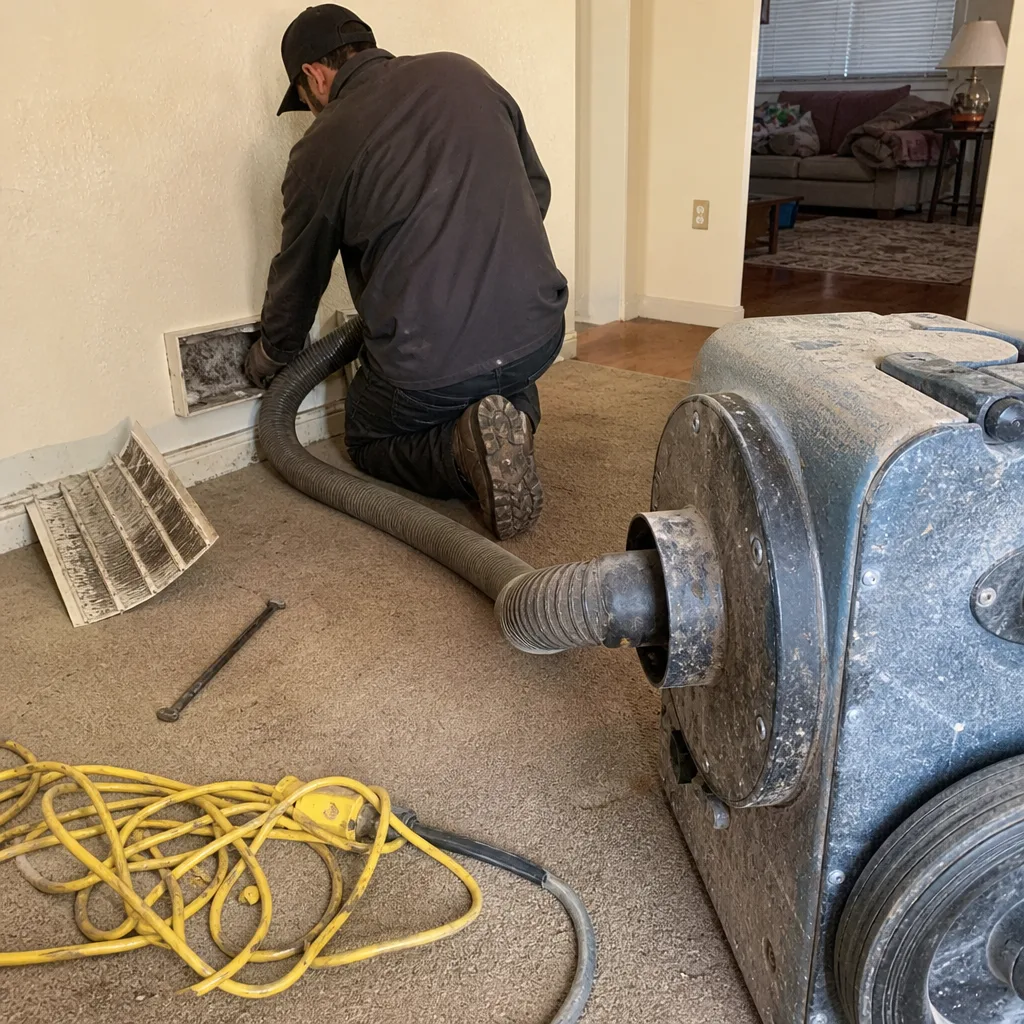 Before
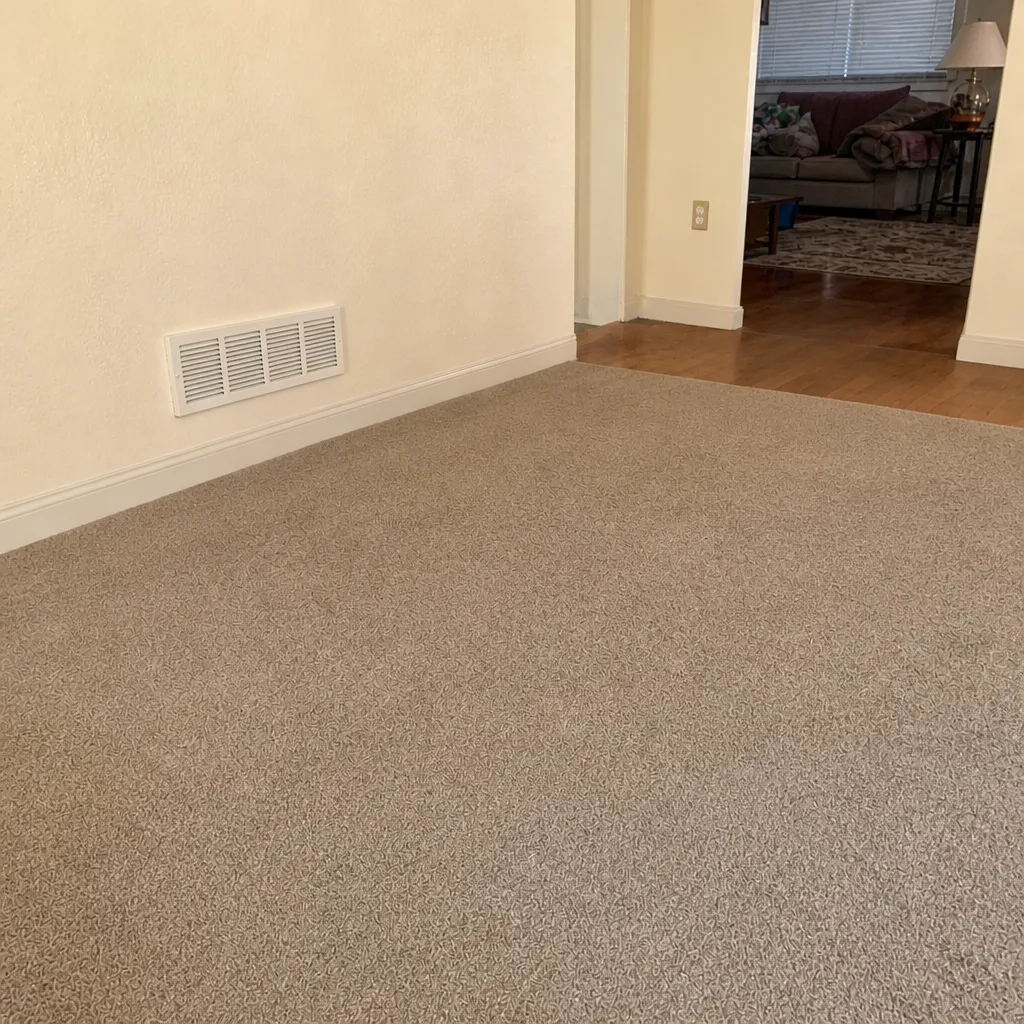 After
 Before
 After
Do You Need to Clean the Whole System or Just Part of It?
Whole-system cleaning is the honest default for a home with more than a few registers, but there are cases where a partial job makes sense. If you’ve just had a single room register stuffed with construction debris after a remodel, a targeted pass on that run is a real scope. If you’re seeing dust at vents across the house, rising energy bills, or a musty smell, the issue is usually in the shared system, not one room, and a single-run pass won’t fix it. Ask the contractor to justify either scope. A whole-system job takes longer and costs more; it also addresses the source rather than the symptom.
Common Mistakes to Avoid
- Booking on the lowest number without a scope in writing. A cheap bid with a vague scope is a bid you can’t compare to anything.
- Assuming “full system” means the same thing to every contractor. Ask for the register count in writing, every time.
- Never asking what equipment will be used. Rotary-brush contact cleaning is the standard; a vacuum-only job costs less to run and cleans less thoroughly.
- Treating repair, sealing, and sanitizing as separate calls. If you split those across contractors, you’ll pay for the access and inspection twice.
- Ignoring the dryer vent while you’re at it. A clogged dryer vent is a fire risk, and it’s a service worth considering alongside the duct work rather than months later.
- Skipping before-and-after photos. Insist on seeing your own ducts photographed before and after, so you know the work was actually done.
- Judging a cleaning by the price tag alone. A thorough job with real equipment and a sealed, sanitized system is what you’re buying.
When to Call a Professional
Call in the trade when you’ve noticed dusty vents that never seem to stop, a musty smell that comes back no matter how often you clean, allergy flare-ups that track with the HVAC turning on, or energy bills that have climbed without an obvious cause. Call sooner if a contractor has already cleaned the system once, and you’re seeing the same symptoms again; that usually means a problem in the system’s repair or sealing, not its dust, and it’s a scope issue that deserves a camera and a written estimate. Harvey Park’s older ranch and split-level homes often surface exactly these issues once a full-system job begins. Air Duct Cleaning Harvey Park offers free estimates in Harvey Park – call (833) 660-4969. We answer 24/7. Fast dispatch from 7am to 7pm, Sunday through Friday.
Frequently Asked Questions
Typical 2026 Denver-metro pricing runs about $99 to $299 for an entry-level service, $300 to $650 for genuine whole-system cleaning, and $650 to $1,200+ for full-system work including repair, sealing, and sanitizing. The written estimate sets the final price, and the range you land in depends on register count, duct material, access, and scope. For a real number on your home, call (833) 660-4969 – estimates are free.
Cheaper quotes almost always price a smaller scope: fewer registers, vacuum-only cleaning, and no inspection, sealing, or sanitizing. A $99 offer against a $650 whole-system bid isn’t a $550 saving, it’s two different jobs. Read both quotes as scope checklists before you compare the totals. Call (833) 660-4969 to have a scope quoted in writing.
You know because you see it: before-and-after photos of your own ducts, a written scope that names the registers covered, and equipment named up front. A professional job with rotary-brush contact cleaning leaves visible results. Ask for the photos, and call (833) 660-4969 to book a scope you can verify.
Most homes benefit from a cleaning every few years, and homes with pets, allergy sufferers, recent remodeling, or original 1950s and 1960s ductwork tend to need it more often. Colorado’s dry air moves a lot of dust through a forced-air system, so a system that’s never been sealed will collect it faster. Call (833) 660-4969 for a free estimate on your home’s timing.
Cleaner ducts and a sealed system let your HVAC move the same air with less effort, which supports lower bills and longer equipment life. It’s not a guaranteed savings figure, and any quote that promises one should raise a question. The real saving comes from the scope: cleaning plus sealing plus coil cleaning together, not cleaning alone. Call (833) 660-4969 for a quote.
Yes. We repair and seal what a cleaning reveals rather than passing you to a separate contractor, and sanitizing with remediation-grade filtration is part of the same visit when it’s warranted. That’s why we quote a full system in one scope. Call (833) 660-4969 for a free estimate.
The Bottom Line
Price without scope is meaningless, and that’s the whole game in 2026 duct cleaning pricing. Compare quotes on register count, equipment named, what’s included in repair and sealing, sanitizing scope, and before-and-after photo evidence. Expect roughly $99 to $299 for thin entry-level work, $300 to $650 for genuine whole-system cleaning, and $650 to $1,200+ for the full scope that includes repair, sealing, and sanitizing, and treat anything under $300 for a home over 1,500 square feet as a scope question. Every quote you receive should be written down before work starts, one flat price per system. That’s how a Harvey Park homeowner gets a real comparison rather than a price race.
Ready for a scope you can actually compare? Call (833) 660-4969 today. We answer 24/7. Fast dispatch from 7am to 7pm, Sunday through Friday. Estimates are free, the price is set per job by the written estimate, and you’ll see before-and-after photos of your own ducts.
Written by the team at Air Duct Cleaning Harvey Park.